
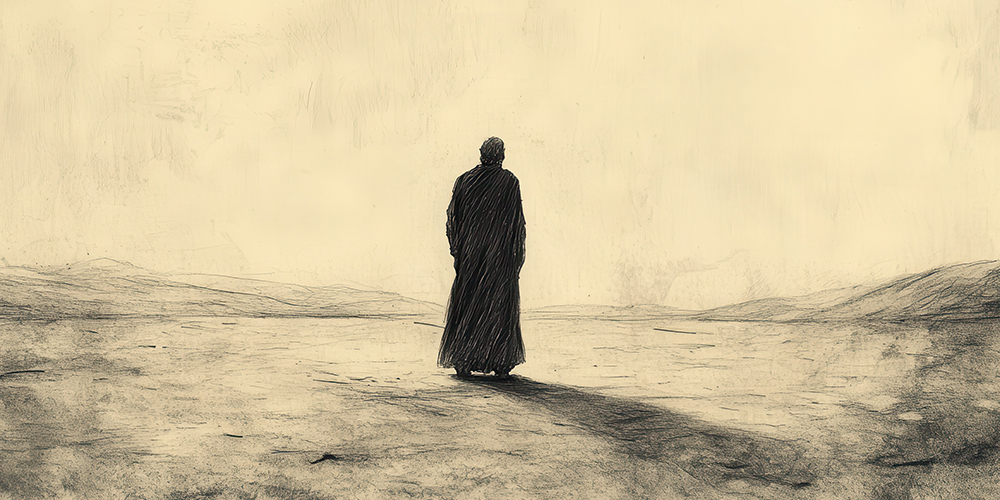
As you open the Book of Job, you discover that God chose a righteous man who was full of pride, and that His method of bringing brokenness and humility to Job was through suffering. Chapters 1 and 2 establish the foundation for this divine work, which is shrouded in mystery and unanswered questions. God uses man as His imperfect instrument to bring beauty out of ashes. Admittedly, this book is difficult to read, but what is even more challenging is accepting the personal application of the Book of Job to our own lives.
Job Was a Real Person (1:1-5)
- He is mentioned alongside Noah and Daniel (Eze. 14:14)
- He was a native of Uz, in present-day Iraq
- He lived between the time of the Tower of Babel and the call of Abraham
- He was a very wealthy and respected judge in his region
- He was extremely righteous in the eyes of God and devoted to the worship of Jehovah
Questions Raised
- Does God promise to protect us from the devil?
- How do God and Satan share an audience together?
- Why was God’s hand so heavy upon Job?
- Why do some righteous, godly saints undergo severe tragedies?
- How do we know if our troubles are from God or Satan?
- What was God’s purpose in releasing Satan’s power on Job?
- What are the lessons of Job for New Testament believers?
The author of the Book of Job is unknown, yet we accept it as God’s inspired voice. Since Job lived 140 years after the events described in the book, he is considered the most likely author. It is evident that God’s hand upon him produced a humble spirit, enabling him to record the dialogue, even when it was not always complimentary to himself.
The Purpose of Writing
- To reveal the character and mysteries of God with mankind
- To show the kind of trust He wants His children to have
- To reveal His favor toward His own and His control over Satan
- To show why the righteous may suffer and the ungodly benefit
- To accomplish these things, God chose to use pain
- Pain is expressed on three levels: Physical, Mental, Spiritual
To address the problems of pain and suffering, we must accept who God is. This acceptance determines what He does and therefore calls us to trust Him without reservation. The best example can be seen in Job’s response to the two horrific trials he experienced.
In response to his loss of wealth and family we read: “Then Job arose, tore his robe, and shaved his head; and he fell to the ground and worshiped. And he said: “Naked I came from my mother’s womb, And naked shall I return there. The LORD gave, and the LORD has taken away; Blessed be the name of the LORD.” In all this Job did not sin nor charge God with wrong” (1:20-22).
To the loss of his personal health, respect, and position in the community we read: “So Satan went out from the presence of the LORD and struck Job with painful boils from the sole of his foot to the crown of his head. And he took for himself a potsherd with which to scrape himself while he sat in the midst of the ashes. Then his wife said to him, “Do you still hold fast to your integrity? Curse God and die!” But he said to her, “You speak as one of the foolish women speaks. Shall we indeed accept good from God, and shall we not accept adversity?” In all this Job did not sin with his lips” (2:7-10).
I doubt that many of us have experienced this level of suffering. This may explain why God permitted Satan to go to such extremes in his attack on Job. By doing so, we can all, in some measure, relate to the trials God allows in our own lives. If Job could respond in this way, we ought to pay attention to our own responses before God.
Lessons From Job’s Experiences
- Asking “Why me God?” is not wrong; it is a very natural and expected response (3:11-12). However, demanding that God immediately answer that question is wrong (13:22). At some point, He may choose to reveal the reason, whether sooner, later, or perhaps never.
- God’s ways are far above our own; He has many eternal purposes. He may choose to use trials for disciplinary reasons or as an example to others who are suffering. He may have even greater purposes, such as allowing the glory of God to be manifested, as in the case of the blind man (John 9) or the resurrection of Lazarus (John 11).
- He may use a period of suffering to draw someone closer to Himself, revealing the issues that hinder intimacy with Him. It took many difficult conversations for Job to gain a clearer understanding of God and himself. Through the trials and sufferings of life, he was drawn into a deeper relationship with God.
- Sorrow and loss are normal experiences in this fallen world influenced by sin (Gen. 3:16-19). Sorrow is validated as a natural response; yet as believers, we do not grieve like those who have no hope. Christ Himself was “A Man of sorrows and acquainted with grief” (Isa. 53:3-4, 10-12a).
- We can be thankful for God’s loving and caring administration of the trials and suffering we face (I Thess. 5:16-18). Just as with the sparrows of the field, His eye is always upon us; He watches each step, and when we fall, He picks us up (Ps. 37:23-24).
- All that we have belongs to God. Everything we possess will be left behind when we depart this life. Anything we have can be lost before we leave this world. Even if God’s sovereign actions bring us sorrow and loss, He is still worthy of all our worship and praise.
- We can rest securely in the arms of the One who has “all things” under control and does “all things” well. We can learn to thank God for everything He brings into our lives, not just the good (Rom. 8:28; Eph. 5:20; Col. 3:15; 1 Thess. 5:18).
An overview outline of Job presents three truths that can broaden our understanding of God and His purposes in the suffering and trials we experience:
- A Sovereign God controls all the actions of Satan and his evil plans. “And the LORD said unto Satan…” (2:6)
- The common person fails to see God’s hand behind all things. “Then said his wife…curse God and die” (2:9)
- The spiritual man accepts all things from the hand of God. “Shall we receive good at the hand of God, and…not receive evil” (2:10)
These principles form a broader perspective, a God-sized view of His dealings with us, just as He did with Job. God’s sovereign hand is in control of the world and Satan (2:6-7). Satan has blinded the eyes of mankind with his limited control of the world (2:9). Faith in the sovereign God opens our eyes to His hand at work (2:10).
The life and Book of Job go on to reveal the blessings of God upon this man’s life: a doubling of material wealth, a fully restored family life, and a reunion with extended family and friends. There is a biblical principle portrayed in the life of Job that also serves as a prophetic picture of the Lord Jesus Christ—suffering first and then glory! For every suffering saint, the promise of glory is held up before them.
“For which cause we faint not; but though our outward man perish, yet the inward man is renewed day by day. For our light affliction, which is but for a moment, worketh for us a far more exceeding and eternal weight of glory” (2 Cor. 4:16-17).
Whether it is short-term or lifelong, as the Lord wills, God offers a double blessing to the suffering believer:
- Our suffering, whether through outward physical or emotional trials, brings about a daily renewal of our spirit. As we continue to endure these hardships, the process shapes us to become more like Christ inwardly.
- Our suffering has a predetermined endpoint, which may come after a short time or even a lifetime. Yet, what awaits us at the end is an “eternal weight of glory.”
Now that is worth the pain and suffering!