
The Paradox of Leadership
When we think of the word “leadership,” a certain set of virtues typically comes to mind. In the high-stakes arena of professional sports, we define it by physical strength, unwavering perseverance, and the courage to take the final shot. In the boardroom, we seek integrity, confidence, and a charismatic ability to inspire a team toward a quarterly goal. Within the Church, we naturally add qualities such as compassion, piety, and a scholarly aptitude for teaching. While these traits are undeniably essential for any leader of a local church, the most vital quality is one we rarely associate with the role in a secular context. In the Christian life, the hierarchy is inverted: to be a leader in the Church, one must, first and foremost, be a follower and servant of Christ.
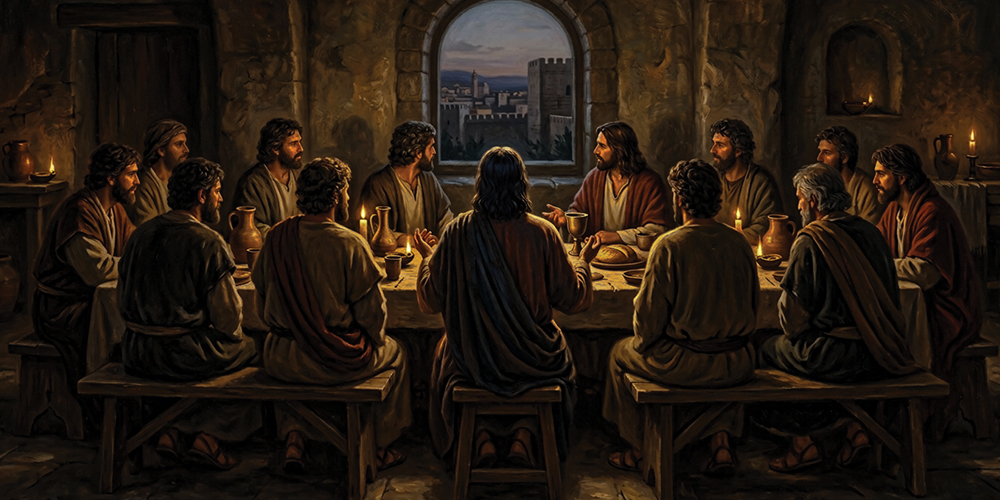
This paradox lies at the heart of the apostles’ story. Before they became the pillars of the early church—before the fire of Pentecost and the bold preaching that shook Jerusalem—they were simply men who obeyed a two-word command given directly from the mouth of Jesus Christ: “Follow me.”
Defining the Disciple
What does it actually mean to be a disciple? In our modern vocabulary, the term is often shrouded in mystery or relegated to historical trivia. For some, “the disciples” refers strictly to the twelve men who walked with Jesus during His earthly ministry. For others, it is seen as a “higher tier” of Christianity—a spiritual promotion reserved for the elite or the exceptionally holy.
However, a biblical survey suggests something much more accessible, yet also far more demanding. In Matthew 10:24–25, Jesus provides the framework: “A disciple is not above his teacher, nor a servant above his master. It is enough for a disciple that he be like his teacher, and a servant like his master…”
From this, we take away a simple truth: for the disciple, the teacher is the ideal. We recognize that we can never be greater than Him, yet our lofty ambition is to model our lives after His. To be a disciple is not to hold a position; it is to pursue a Person. One of Christ’s first commandments was to become a disciple, and one of His final instructions, in the Great Commission, was to make disciples of all nations (Matt. 28:19). It is the beginning and the end of the Christian journey.
The Cost of the Call
Christ introduced the cost of this pursuit with language that often shocks the modern ear. He stated that unless one hates his father, mother, wife, children, and even his own life, one cannot be a disciple (Luke 14:26). To understand this, we must look past our 21st-century definitions. In this biblical context, “hate” does not imply the anger or hostility we associate with the word today. Rather, it refers to a rejection in terms of priority. We see this in Malachi when God says, “…Was not Esau Jacob’s brother?” Says the LORD. “Yet Jacob I have loved; But Esau I have hated…” (1:2-3). This was a matter of election and priority regarding the promise to the nation Israel.
Christ is telling us that if we desire to follow Him, He must hold undisputed first place. Our earthly lives, our deepest family ties, and our personal ambitions must take a distant second place to the desire to know Him. In a world competing fiercely for our attention and affection, this remains the most challenging requirement.
The Divine Recruitment Strategy
If this is the rigorous standard—absolute surrender—the next logical question is: who would be brave enough to answer the call? If we were orchestrating a movement intended to change the world, we would likely look for people of renown.
We might have recruited a Pharisee like Nicodemus for his intellectual clout, a Roman general for strategic insight, or perhaps a few members of the nobility to provide the necessary funding and social standing. We would choose people whom history was already prepared to acknowledge, those with large circles of influence who could ensure the message went viral.
However, God’s ways and thoughts are higher than our own (Isa. 55:8-9). As far back as Deuteronomy 7:7, God reminded Israel that He chose them not because they were the most numerous or powerful, but because they were the fewest. By choosing the unlikely, the victory can only be credited to Him.
Jesus repeated this process with His inner circle. Had He surrounded Himself with the elite, skeptics might have argued that His popularity was simply the result of political manoeuvring. Instead, He chose men who were otherwise destined for obscurity, ensuring that the impact of the early church could only be explained by the power of the Holy Spirit.
The Roster: A Study in Contrast
When we look at the group as a whole, we see a fascinating and often clashing tapestry of backgrounds.
The Mariners of Galilee: At the forefront is the fishing contingent. Simon (Peter) is the most prominent, a man of action and occasionally impulsive words. Alongside him were the “Sons of Thunder,” James and John, who rounded out Jesus’ inner circle. Finally, there was Andrew, Peter’s brother, who had previously been a disciple of John the Baptist, demonstrating a heart that was already searching for the Messiah before the call even came.
The Outcasts and the Skeptics: Moving away from the sea, we find Matthew (Levi). As a tax collector for Rome, Matthew would have been viewed as a traitor by his Jewish peers. Yet Jesus called him from his booth to a higher ledger. Then there is Thomas, often called “The Twin,” who gained lasting infamy as “Doubting Thomas.” While history remembers his one act of skepticism, Jesus saw a man willing to ask the hard questions.
The Men in the Shadows: Then there are those who served faithfully with very little mention in the biblical record:
- Philip and Nathanael: Friends who recognized the Christ through the study of the law and prophets.
- Simon the Zealot: A political revolutionary who likely had to learn to love Matthew, the very man he once would have considered a political enemy.
- Jude (Thaddaeus) and James, son of Alphaeus: Men who labored in the background, proving that you do not need the spotlight to be a true disciple.
The Warning: Finally, we must acknowledge Judas Iscariot. Although he walked the same dusty roads and heard the same sermons as the others, his life serves as a sobering reminder: one can be in the presence of the Master without ever truly surrendering to Him.
A Master Who Picks Us Up
Each of these men was profoundly changed by their time with Jesus. Throughout the Gospels and the book of Acts, we glimpse their hardships, their trials, and the eventual joy they discovered in Christ. They faced the same fears, passions, and anxieties that we experience today.
Perhaps the greatest lesson we can learn from the Twelve is that even the best disciples are prone to falling. Peter denied Him; the others fled in the garden. Yet we serve a Master who does not discard us when we stumble. He showed these ordinary men extraordinary things about Himself, so they could learn to abide in His Word and bear much fruit. Their impact did not come from their own strength, but from the fact that they spent three years simply being with Jesus. We, too, can learn from them how to be like Him.